A few years ago, IT infrastructure was still managed mostly by hand. Administrators logged into servers, installed packages, adjusted configurations, and hoped that every environment would remain consistent. The problem is that manually managed infrastructure quickly becomes difficult to maintain, error-prone, and heavily dependent on the knowledge of specific individuals. That is why more and more companies are adopting the Infrastructure as Code (IaC) approach — managing infrastructure through code and automation.
What is Infrastructure as Code?
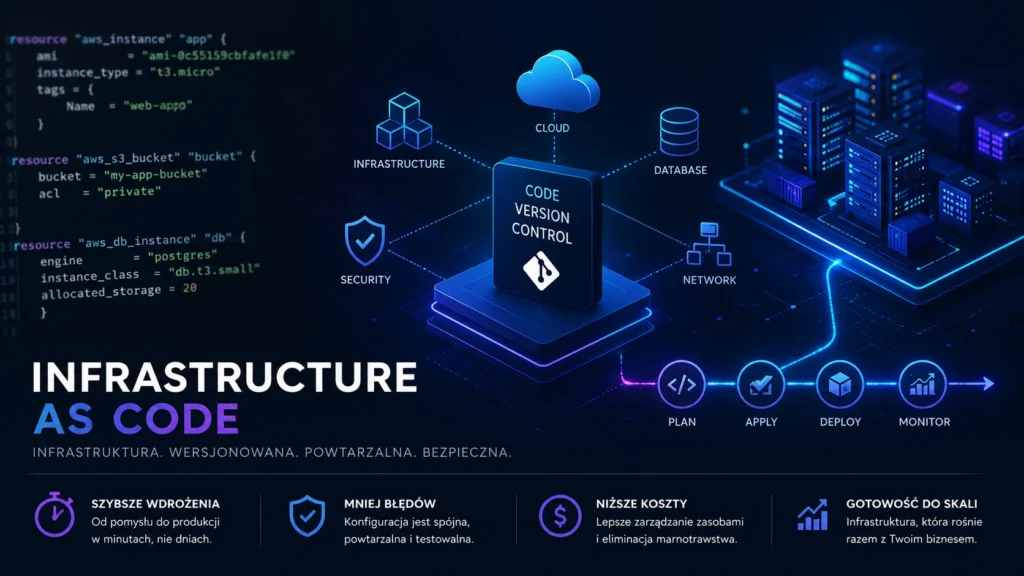
Infrastructure as Code means defining infrastructure in code rather than configuring everything manually. Servers, networks, backups, load balancers, Kubernetes clusters, and cloud resources are described declaratively and stored in version-controlled repositories.
Technologies such as Terraform, Ansible, Kubernetes YAML, Helm, and GitOps are commonly used to achieve this. The result is predictable, repeatable infrastructure that can be deployed, recreated, or scaled automatically.
Why should businesses care?
The biggest issue with manually managed infrastructure is operational chaos. Situations like these are extremely common:
- “It works on this server.”
- “Someone changed something manually a few months ago.”
- “Nobody knows exactly what was modified.”
Infrastructure as Code removes much of this uncertainty. Every change becomes versioned, auditable, and reproducible. Businesses gain greater visibility into their environments, reduce outages caused by human error, and accelerate the deployment of new services.
This becomes especially important when organizations start building:
- High-Availability environments,
- Kubernetes platforms,
- CI/CD pipelines,
- multiple development and testing environments,
- disaster recovery strategies,
- multi-cloud infrastructure.
At a certain point, managing infrastructure manually simply becomes unsustainable.
Why developers need IaC as well
The line between developers and infrastructure engineers has been disappearing for years.
Modern software development increasingly involves Docker, Kubernetes, CI/CD pipelines, deployment automation, and cloud-native environments. Infrastructure as Code provides consistency across environments, minimizes “works on my machine” issues, and allows infrastructure to be recreated quickly for local development, testing, or production deployments.
That is why IaC has become one of the core foundations of modern DevOps practices.
Infrastructure as Code and security
Many organizations mistakenly assume that automation automatically improves security. In reality, poorly designed automation can spread misconfigurations and vulnerabilities across the entire infrastructure within minutes.
This is why concepts such as DevSecOps, Policy as Code, configuration validation, and automated security scanning are becoming increasingly important. Properly implemented IaC improves stability, security, and operational reliability. Poorly implemented IaC simply automates chaos at scale.
Does every company need IaC?
Not necessarily.
If a company operates a single small website or one simple server, deploying a full Terraform and Kubernetes stack may be unnecessary complexity. However, once a business begins scaling, onboarding more customers, building SaaS platforms, or requiring high availability, the lack of automation starts generating real operational costs, risks, and inefficiencies.
Summary
Infrastructure as Code is not just another technology trend. It represents a fundamental shift in how modern IT infrastructure is designed and managed. For businesses, IaC means better stability, faster deployments, easier scalability, and improved operational control. For engineers and developers, it provides automation, consistency, and a far more efficient workflow. Companies that continue relying entirely on manual infrastructure management will gradually struggle to remain competitive in increasingly automated environments.
How can we help?
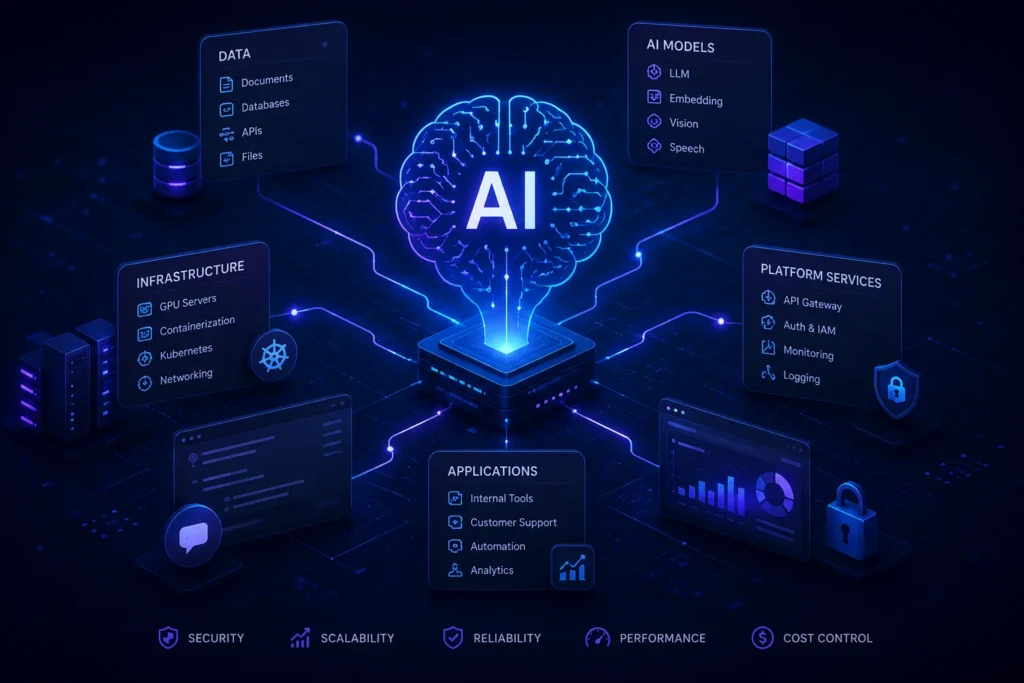
At Implsoft, we help companies design and implement modern IT environments based on DevOps, Kubernetes, CI/CD, infrastructure automation, and High-Availability solutions.
If you want to modernize your infrastructure or prepare your environment for future scaling — feel free to contact us.